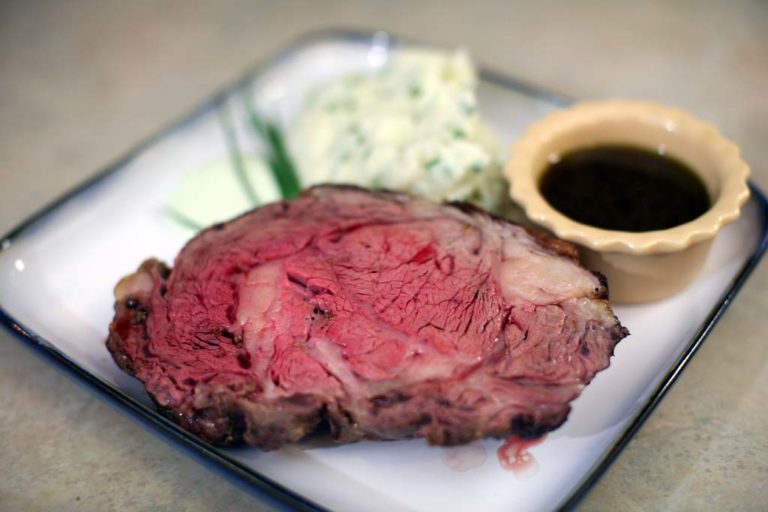
Chef's notes:
A prime rib roast is a standing rib roast of the highest quality. At least that’s what it used to mean. The USDA’s system for grading beef has eight categories. Prime is number one—the best. But the 2nd option – choice – isn’t terrible either. As prime rib grew in popularity, someone had the brilliant idea to substitute choice rib for prime. Amazingly no one complained; probably because they didn’t know. Well, these days, order a prime rib anywhere but at the most reputable steakhouses and you will most likely end up with choice or even select rib. Ask the butcher or waiter, “Is this meat graded prime?” Of course you should expect to pay a lot more for true prime, so be prepared.
Ingredients
- 4–5 pounds prime rib
- Salt
- Black pepper
- Butter
- 1 sprig rosemary
- 12 green onions
- 8 sprigs parsley
- 4 cloves garlic
Prime Rib Recipe: Seasoned with Sea Salt and Black Pepper Roasted Rare and Served Au Jus
- Pick up a prime rib roast. Tracking down a prime standing rib roast proved to be quite difficult, at least with short notice. Several of the butchers in town could have gotten me a standing rib roast, but none had any prime rib on hand. I finally settled for a boneless prime rib roast. I asked for 4‒5 pounds of the middle section. I was a little disappointed that it was boneless, but at least it was prime. Let your roast set out for 4‒5 hours before you cook it so it can warm up. Room temperature meat cooks more evenly. About 30 minutes before you start cooking, preheat the oven to 450 degrees F.
- How to tie a prime rib roast step 1. Cut a piece of butcher’s twine long enough to go all the way around the roast, plus a little extra to make a knot. Tie the twine every 2 inches and one over the top all the way around.
- How to tie a prime rib roast step 2. Tie each piece of twine tightly around the prime rib roast. Pull the twine snug but not super tight. Tie a double square knot and trim the excess.
- Get the prime rib roast ready. Apply coarse salt and black pepper to the roast. I am not convinced at the effectiveness of smearing butter on the exposed flesh of the roast. It just melts off. I think lard, as in the French technique of barding, would be more effective. To the bottom of the pan, I add rosemary, parsley, green onion, and garlic. This is just to add flavor to the drippings.
- Roast the prime rib. Initially roast the prime rib at a high temperature, 450 F, for 25 minutes to convert some of the surface fat and crisp up the outside. Then lower the oven temperature to 350 degrees F and continue roasting until the internal temperature reaches your target (see the next step for exact temps). I add a cup of beef stock to the bottom of the pan at this stage. This helps with making au jus later. To best monitor the internal temperature as it roasts, use a digital thermometer with a probe that stays in while the prime rib cooks. Set the temp alarm for the desired doneness, and let it roast until the alarm goes off.
- Check the internal temperature of the prime rib. Use the following temperatures as a guide: Rare 120–125 degrees, medium-rare 125–135, medium 135–145, medium-well 145–155, and well done is overcooked. I take my roast out of the oven when it is about five degrees below the target temperature. It will keep cooking for a few minutes after it comes out of the oven. Set the roast on a wire rack, and loosely cover it with aluminum foil for 30 minutes. Some liquid will come out of the roast as it rests, so make sure to catch it to make the au jus. Combine the strained pan drippings with the other cup of beef stock and the red wine and reduce by 1/3rd volume. Slice the prime rib thickly and serve with the au jus.
Tips & Tricks
- The rib roast itself is also from where we get rib eye steaks. A true seven rib standing rib roast has a wide array of meat and meat qualities within it. The larger end comes from the rear of the rib roast, right next to the strip or short loin, which is where New York Strips come from. So, as you may expect, the rib meat on that end closely resembles strip loin meat; it’s leaner and not as round. As you move further up the roast closer to the neck, the meat gets more marbled and fattier. In my opinion the best rib meat will come from this end.
Wasabi Dip Recipe
- 1 Tbsp wasabi powder
- 3 Tbsp sour cream
- Sea salt
Whisk together, salt to taste, and refrigerate until needed.
Au Jus Recipe
- 2 cups pan drippings
- ¼ cup beef stock
- 2 Tbsp red wine
Combine, reduce slightly, and add salt, pepper, or more stock to balance the flavor.
