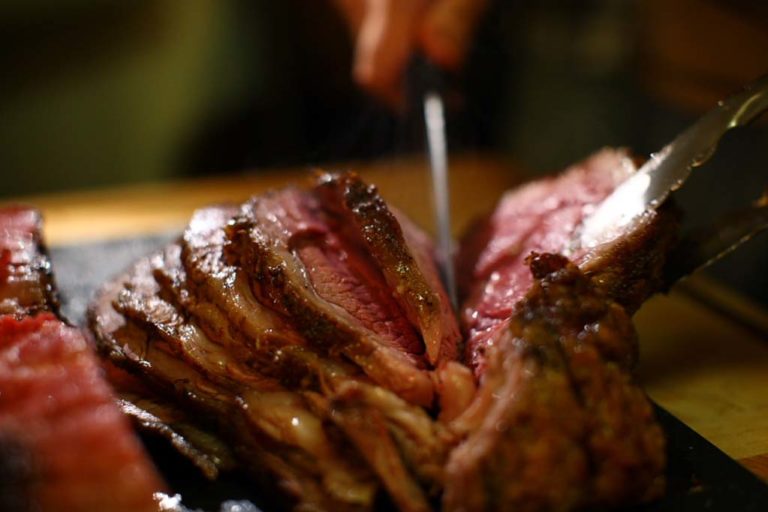
Chef's notes:
Other than being a big part of a lot of American’s childhoods, roast beef is a common component at all celebratory feasts: weddings, birthdays, graduations, reunions, anniversaries, and even funerals.
Any cut of beef is roast-able; some just come out better. My personal favorite is a bone-in standing rib roast. The meat cooked right on the bone, juicy and buttery on the inside and salty and crisp on the outside. The standing rib roast is a popular holiday roast. When the roast comes out of the oven, it looks very stately and attractive. And for all this and more it is one of the more expensive cuts of meat, but the reward is extremely tender and delicious.
Ingredients
- 3-5 lbs standing rib roast
- Sea salt
- Black pepper
- Vegetable oil
Roast Beef Recipe: Roasted with Salt and Pepper in an Extra Hot Oven, then Low and Slow until Done
- Take the beef out of the fridge a couple hours before roasting time. Letting the meat come up close to room temperature will help it cook evenly. Once the meat has been out of the fridge for a couple of hours, preheat the oven to 500 degrees F. Next, score the fatty part of the roast with a boning knife trying not to cut into the meat. Season the meat with salt and pepper, followed by a thin coating of vegetable oil to help brown the meat. Place the meat on a roasting pan.
- The first stage of roasting beef is a high temperature to help give the meat a crust. Once the oven has finished preheating, place the roast in the oven on the rack in the next to the bottom position. Do this quickly to conserve as much heat as possible. If your roast is under 10 pounds, set the timer for 20 minutes. If it’s over 10 pounds, set the timer for 30 minutes. This step caramelizes and crisps the outside of the roast.
- The second stage of roasting requires patience and a thermometer. Lower the temperature of the oven to 350 degrees. The best way to finish the roast is to purchase a digital thermometer with a detachable probe. That way you can monitor the inside temperature of the roast as it cooks. Once your preferred internal temp has been reached, take it out. Make sure to place the probe in the very middle of the meaty portion. Here is the list of internal temperatures for the desired doneness: rare 120–125; mid-rare 125-135; medium is 135-145; mid-well 145-155; and well done is 155-165 degrees F.
- The final stage of roasting—resting, which allows the meat to settle down and finish cooking. Once the roast has finished cooking and the internal temperature has been reached, it’s time to let the meat rest. Take the roast out of the oven and place it on the counter. Drape aluminum foil over the top of the roast to keep some of the heat in and picking fingers out. Leave it this way for 20–30 minutes before cutting it up. When cutting the meat, slice across the grain. If the meat is a bit chewy, slice it extra thin. Enjoy!
Tips & Tricks
- Another way to roast beef is to start it at 350 degrees and roast it until it is close to being done and then crank the oven to 500 to get the crusty outside. I have used both techniques with great success. I prefer the first because I can control the heat better when I start at a high temperature.
- Don’t open the oven unless you have to. Letting all the heat out is bad.
- While you let the roast rest, you could make the gravy out of the drippings.
- Some butchers require advanced notice for some cuts of meat. Usually they need no more than a day.
- Its best to be on a first-name basis with your butchers, as they are your friends and a vast resource of meat knowledge.
