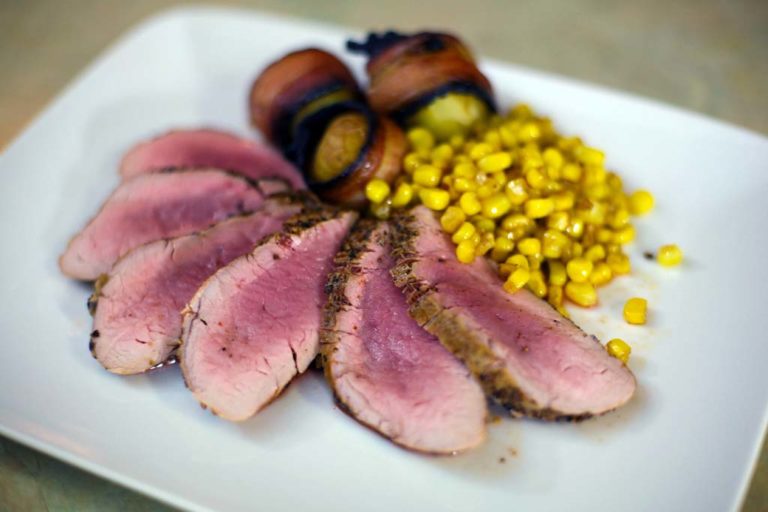
Chef's notes:
Pork tenderloin, as you may be able to tell by its name, is a tender cut of meat. In fact, as far as a pig is concerned, it is the tenderest cut of meat. The pork tenderloin is often sold in marinades. Which to me is a mystery since marinades are usually used to add flavor where there is none, or even more commonly to tenderize meat. But the pork tenderloin is already tender. And it has a great flavor. So why the marinade? It’s probably a corporate conspiracy of epic proportions, so just avoid it and buy the fresh pork tenderloin.
Ingredients
- 1 pork tenderloin
- Sea salt
- Black pepper
- Cayenne
- Butter
Sea Salt and Cayenne Pepper Seasoned Pork Tenderloin, Pan-Roasted in Butter
- Buy a pork tenderloin. As I said above, buy the plain, fresh pork tenderloin and avoid the bagged and pre-marinated pork tenderloins. My biggest concern is why are they in marinade to begin with? Were they old, spoiled, chewy, flavorless, or what? Secondly, how long have they been in the marinade and how long have they been frozen? Just play it safe and buy fresh-looking and fresh-smelling pork tenderloin.
- Season the pork tenderloin. With pork tenderloin, as with all tender pieces of meat, I recommend keeping the seasoning to a minimum. Use a good salt and some fresh cracked pepper to season the pork tenderloin. And maybe for a little fun dust the pork tenderloin with a little cayenne pepper. The salt and pepper will accentuate, while the cayenne will give it a little zing. Preheat the oven to maximum heat (500‒550 degrees F).
- Lightly fry the pork tenderloin. Pork tenderloin will roast in no time at all, so I like to fry it a little in a frying pan first to help speed up the browning process. Melt a tablespoon of butter in the bottom of the pan over medium-high heat. Fry the pork tenderloin for 4 minutes or until browned slightly dark. Then flip the pork tenderloin over and place the whole thing into a preheated 500‒550 oven.
- Put the pork tenderloin in the preheated oven. Because the pork tenderloin will take so short a time to roast, we want to cook it at a very high temperature. This will ensure that by the time the inside is done, the outside will have the proper amount of browning to build contrast between the inside and the outside in both flavor and texture. I think in a lot of ways it is helpful to think of the pork tenderloin as a funny-shaped steak. Because that is basically how it should be treated.
- Let the pork tenderloin rest before you cut it up. Use a digital thermometer to judge when the pork tenderloin is done to your liking. If you have one that can be placed during cooking, use that, otherwise take the internal temperature every couple minutes. Begin checking after 2‒3 minutes of initial roasting. If you like your meat rare like the photo above, take it out of the oven when it reaches 130‒135 degrees. For medium 140‒150, and for well done 150‒160 degrees.
Tips & Tricks
- Buy fresh-smelling and fresh-looking pork tenderloin.
- Don’t waste your money on pre-marinated pork tenderloin.
- Wait until the oven is finished preheating before putting the roast in. Putting an oven thermometer on one of the racks is the best way to be sure. The oven thermostat may not be accurate.
- Check the temperature of the pork tenderloin roast by placing the tip of the thermometer probe in the very center of the roast. Push it straight down from the top into the very middle.
- Don’t skip the resting step, as cutting into the meat while it is still very hot will dry it out.
