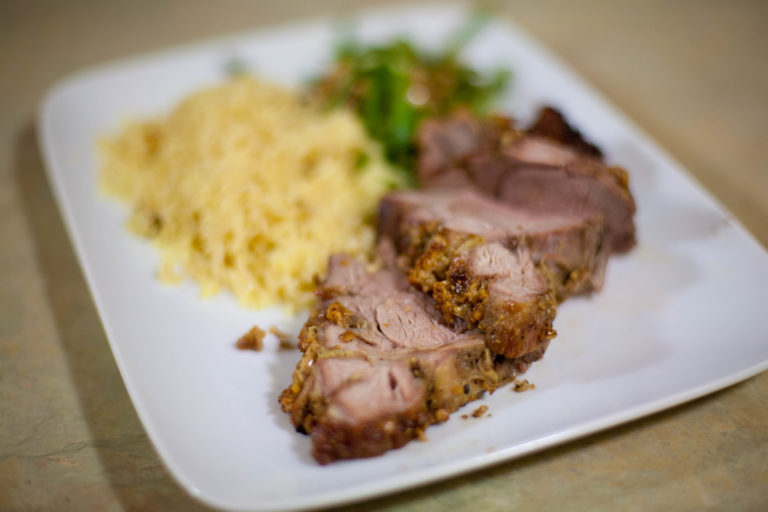
Chef's notes:
Lamb is roasted off the bone almost as frequently as on the bone. Roasting meat on the bone can improve the flavor of the meat somewhat, but mostly it just adds a lot of flavor to the drippings and ultimately to any gravy that you may want to make. But for the most part lamb is roasted off the bone because its easier. It’s easier to cook, season, and slice. I have already written an article about roasting boneless lamb leg, so I decided I should cover all my bases and roast a leg of lamb.
Ingredients
- 1 leg of lamb
- 3 heads garlic, minced
- 1 Tbsp coriander, ground
- 1 Tbsp sea salt
- 2 tsp black pepper, cracked
Leg of Lamb Recipe: Bone-In Whole Leg of Lamb Roasted with Minced Garlic, Coriander, Sea Salt, and Black Pepper
- Decide what to season your leg of lamb with. There are many traditional herbs and spices that go very well with lamb. To the right, I have listed several of them. I personally prefer garlic and corriander. Those flavors, when combined with salt and pepper, are simple enough to refrain from masking the inherent flavors of lamb, flavors I like, while being strong enough to accompany the intense flavors lamb has to offer.
- Season the leg of lamb with herbs and spices. Mince the garlic finely by hand or use a food processor as I have done here. Cut slits into the fat and flesh about one inches apart for eachother. Combine the salt, pepper, and coriander and rub it all over the meat and in the slits. Then fill the slits with garlic. Make sure to get the underside too. Heat the oven to its maximum setting, or 500 – 550 degrees F.
- Begin roasting the lamb. Once the oven is up to heat, put the lamb onto a wire rack in a roasting pan. If you would like to roast some veggies and root vegetables, make sure to use enough of them to cover the bottom of the pan. Otherwise they will burn. Set the timer for 20 minutes and put the pan on the second from the bottom rack. The first stage of roasting will help to caramelize the outside of the lamb and convert some of the fat into crispy goodness.
- Roast the lamb to your desired doneness. After the first 20-minute stage of roasting is done, turn the oven down to 450 F. The length of cooking will depend on how you like your lamb cooked. Lamb is recommended to be cooked rare or medium rare. Any cooking past that and you may as well make pot roast. Use a digital thermometer that can stay in the roast while it roasts to make sure that you cook it to the right temperature. Use the temperatures listed below as a guide. Oh, by the way, let the lamb rest loosely covered with foil for about 30 minutes before carving it.
Tips & Tricks
- Putting a little foil under the lamb while it roasts will help when it comes time to clean up.
- Don’t open the oven unless you have to. If one of your guests tries to take a peek, take away their plate and say “no lamb for you.”
- While the meat rests, elevate it a little so it doesn’t sit in its own juices. Juices will affect the exterior texture of the meat.
- It is best to refrain from lamb impersonations until after dinner.
- Trim some of the excess fat and any connective tissue on the surface. Some of the silverskin will be impossible to remove, so just forget about it.
- If you have a convection oven, reduce the cooking temperatures by 75-100 degrees.
- When roasting lamb, the temperature chart is a little different than it is for beef. Lamb dries out at a lower temperature, so the chart shifts down about 5-10 degrees. And there aren’t even temps for well done. I just won’t do it. For rare lamb, cook to 115‒120 degrees, medium-rare to 120‒130 degrees, and medium is around 130‒140 degrees. Of course, the FDA wants you to cook it to 145 or something, but they don’t care about quality. Their number one concern is safety. Silly, I know.
